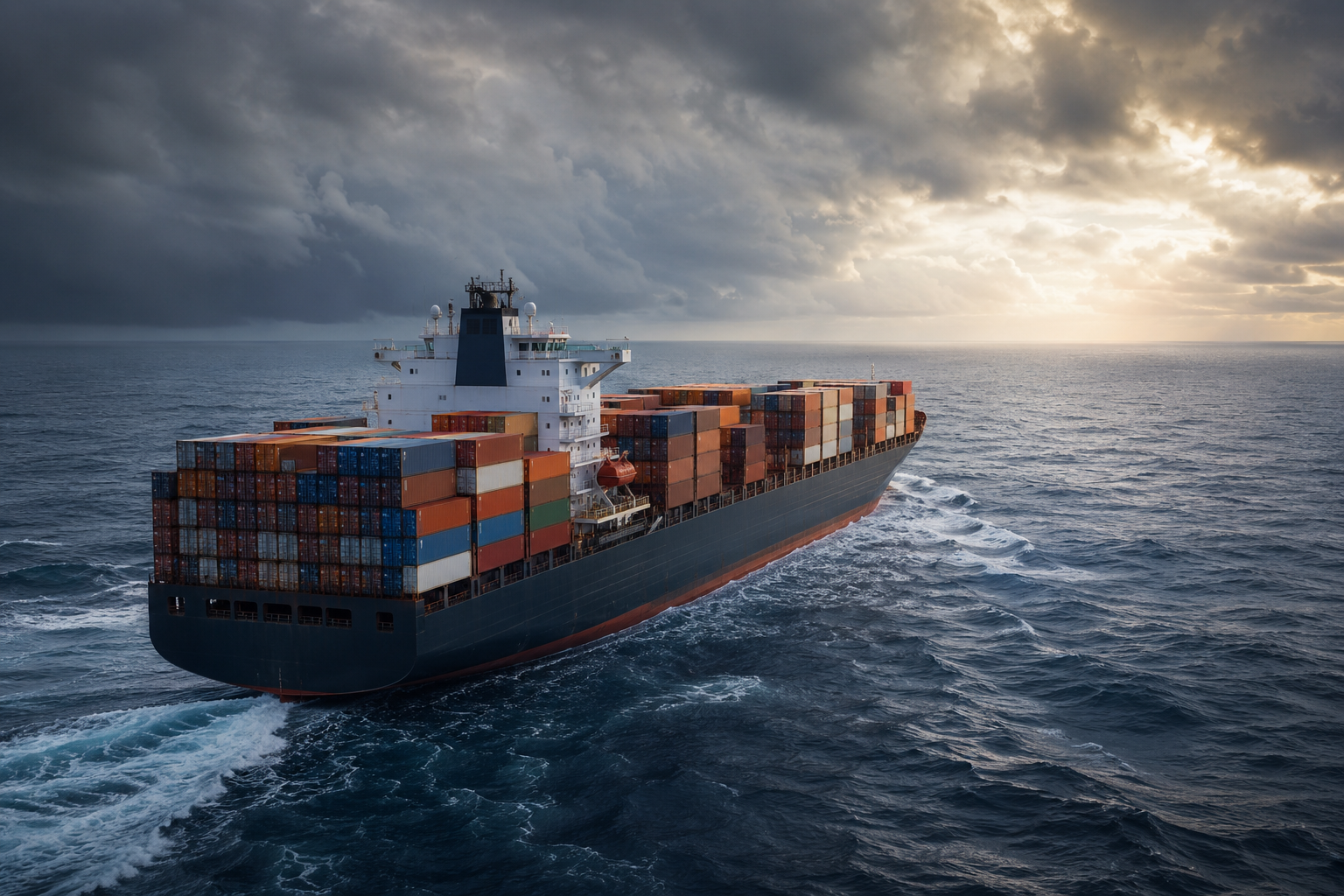
Global shipping has always been exposed to uncertainty. But the nature of that uncertainty has changed.
Geopolitical conflict, port congestion, climate disruption, changing trade policies, volatile fuel costs and disruption along some of the world's most important shipping corridors are increasingly occurring at the same time.
We often describe this environment as VUCA: volatile, uncertain, complex and ambiguous.
For procurement and supply-chain professionals, VUCA is no longer simply a leadership concept discussed in strategy sessions.
It is visible in our containers.
It is visible in our lead times.
And increasingly, it is visible in our freight invoices.
In August 2026, the Drewry World Container Index reached $4,526 per 40-foot container, increasing 4% in a single week.
At the same time, geopolitical instability continues to influence shipping routes, port congestion is absorbing capacity across global networks, and South African importers face another challenge much closer to home: congestion at the Port of Durban.
The result is a supply chain in which the cheapest freight rate on a comparison sheet may not necessarily represent the lowest cost to the business.
What is the total cost—and risk—of getting that material to the operation when it is actually needed?
VUCA Has Become a Freight Cost
Shipping prices are not determined only by the distance between two ports.
They are influenced by the availability of vessels and containers, fuel prices, port productivity, insurance costs, geopolitical risk and the routes carriers are willing—or able—to use.
When one of those variables changes, the system adjusts. When several change simultaneously, volatility increases significantly.
The Red Sea is a good example.
Security concerns have caused vessels to avoid traditional routes and, in some cases, travel around the Cape of Good Hope instead. A longer journey consumes more fuel, vessel capacity and time.
Elsewhere, congestion can remove effective capacity from the system even when there are technically enough vessels available.
Shipping capacity may exist—but usable shipping capacity at the right place, at the right time and through the right route may not.
That uncertainty eventually finds its way into freight prices.
For procurement teams, understanding the freight market therefore requires understanding the events surrounding it.
And Then the Container Reaches Durban
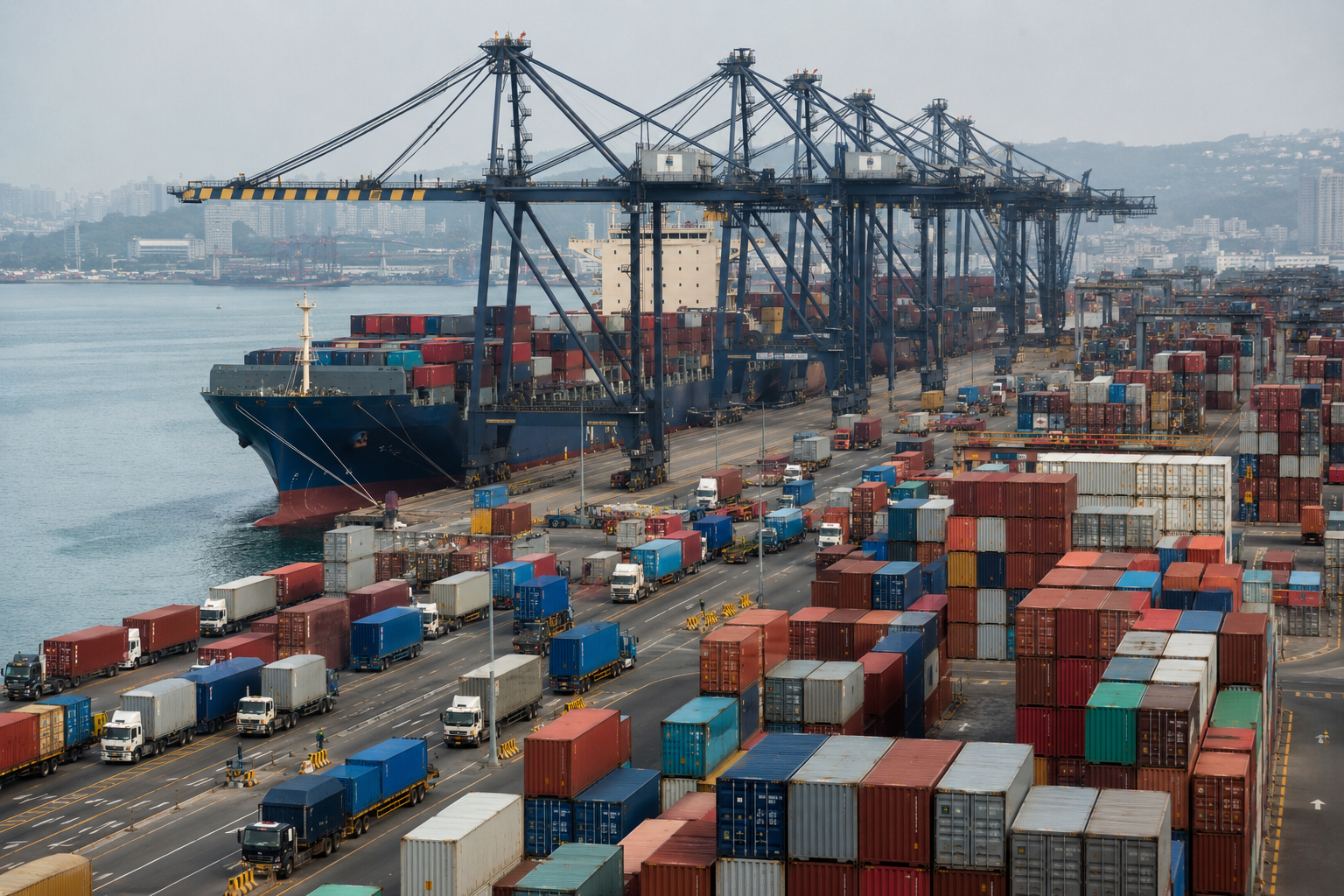
For South African businesses, global shipping risk does not disappear when a vessel reaches our coastline.
The Port of Durban remains one of the most important gateways into the South African economy, which means disruption there quickly becomes a supply-chain problem for businesses far beyond the port itself.
Current congestion has become serious enough for the Southern African Association of Freight Forwarders to escalate concerns about the impact on the national supply chain, affecting cargo owners, freight forwarders, producers, transporters and other service providers.
The Presidency has subsequently become involved in efforts to address the situation.
For an importer, this creates an uncomfortable reality.
A procurement team can negotiate the supplier successfully.
The material can leave China on schedule.
The vessel can navigate geopolitical disruption.
The container can travel thousands of kilometres across the ocean.
And it can still arrive late at the factory because of congestion at the final port.
That is why logistics risk cannot be treated as something that happens after procurement. It is part of the sourcing decision itself.
1. Freight Price Is Not Total Landed Risk
Consider two freight options.
One is significantly cheaper but has inconsistent sailing schedules, multiple transshipments and greater exposure to congestion.
The other costs slightly more but provides greater schedule reliability and a more predictable route.
On a procurement comparison, the first option wins. Operationally, it may be the far more expensive decision.
If critical raw material arrives two weeks late, the consequences can extend well beyond freight.
Production schedules may change. Teams may need to expedite alternative material. Safety stock may be consumed. Customer orders could be affected. In extreme cases, production could stop altogether.
Suddenly, the saving achieved during the freight negotiation becomes insignificant compared with the cost of disruption.
This does not mean procurement should stop challenging freight costs.
Price needs to be evaluated alongside risk.
2. Lead Time Should Be a Range, Not a Number
We often talk about lead time with a level of certainty that today's global shipping environment simply does not provide.
A system may say an imported material has a 45-day lead time. Planning then works backwards from those 45 days.
But what happens when 45 becomes 52? Or 60?
Congestion at origin, missed sailings, vessel rerouting, transshipment delays and destination-port constraints can all change the actual arrival date.
Yet many organisations continue planning around a single number.
Perhaps we should stop asking only: “What is the lead time?”
And start asking: “What is the lead-time range—and how much variability can our operation tolerate?”
A material that normally arrives between 42 and 48 days should be planned differently from one that fluctuates between 35 and 65 days—even if both suppliers quote a nominal 45-day lead time.
3. The Sourcing Decision Doesn't End When the PO Is Placed
There is sometimes an artificial line between procurement and logistics.
Procurement negotiates the supplier, price and commercial terms. The purchase order is placed. Logistics gets the material to the plant.
In today's environment, that separation is becoming increasingly difficult to defend.
The route a material travels, the ports it moves through, carrier reliability and the number of potential failure points between supplier and factory all influence the real risk of a sourcing decision.
This becomes particularly important when comparing local and imported supply.
An international supplier may offer a significantly lower purchase price. That advantage may be completely valid.
But the sourcing decision should also consider additional lead time, inventory requirements, currency exposure, shipping reliability and recovery options when something goes wrong.
That does not automatically make local sourcing better. Nor does it make importing inherently risky.
The sourcing model needs to reflect the complete supply chain rather than stopping at the supplier's gate.
4. Inventory Strategy and Procurement Strategy Have to Talk to Each Other
For years, businesses have rightly focused on reducing inventory.
Inventory consumes working capital. Excess stock creates storage costs, increases obsolescence risk and can hide underlying planning problems.
But there is another side to that equation.
Running extremely lean inventory against an increasingly variable inbound supply chain creates its own financial risk.
The answer is not simply to increase safety stock everywhere. It is to become much more deliberate about where inventory protection is actually necessary.
A locally sourced, readily available material with several qualified suppliers may require very little protection.
A production-critical imported material with a long and highly variable lead time may justify a completely different strategy.
This is where procurement, planning, finance and operations need to make the decision together.
Procurement understands supplier and market risk.
Planning understands demand variability.
Operations understands the consequence of material shortages.
Finance understands the cost of working capital.
None of those perspectives alone gives the complete answer.
Where does holding additional inventory cost less than the risk of not having it?
Procurement in a VUCA World
Perhaps one of the biggest lessons from the current shipping environment is that procurement's contribution cannot be measured purely through negotiated savings.
A sourcing decision affects inventory, working capital, production continuity, customer service and ultimately the resilience of the business.
The VUCA environment doesn't mean organisations should attempt to eliminate uncertainty. That would be impossible.
It means we need to become better at pricing, planning and making decisions around uncertainty.
Sometimes the lowest freight rate will still be the right decision. Sometimes paying more for reliability will create greater value.
Sometimes the answer will be dual sourcing, a combination of local and international supply, different inventory policies or deliberate contingency capacity.
There is no universal formula.
Perhaps the question procurement leaders should increasingly be asking is no longer simply:
“How much can we save on freight?”
It is:
“How much uncertainty can our operation afford?”